



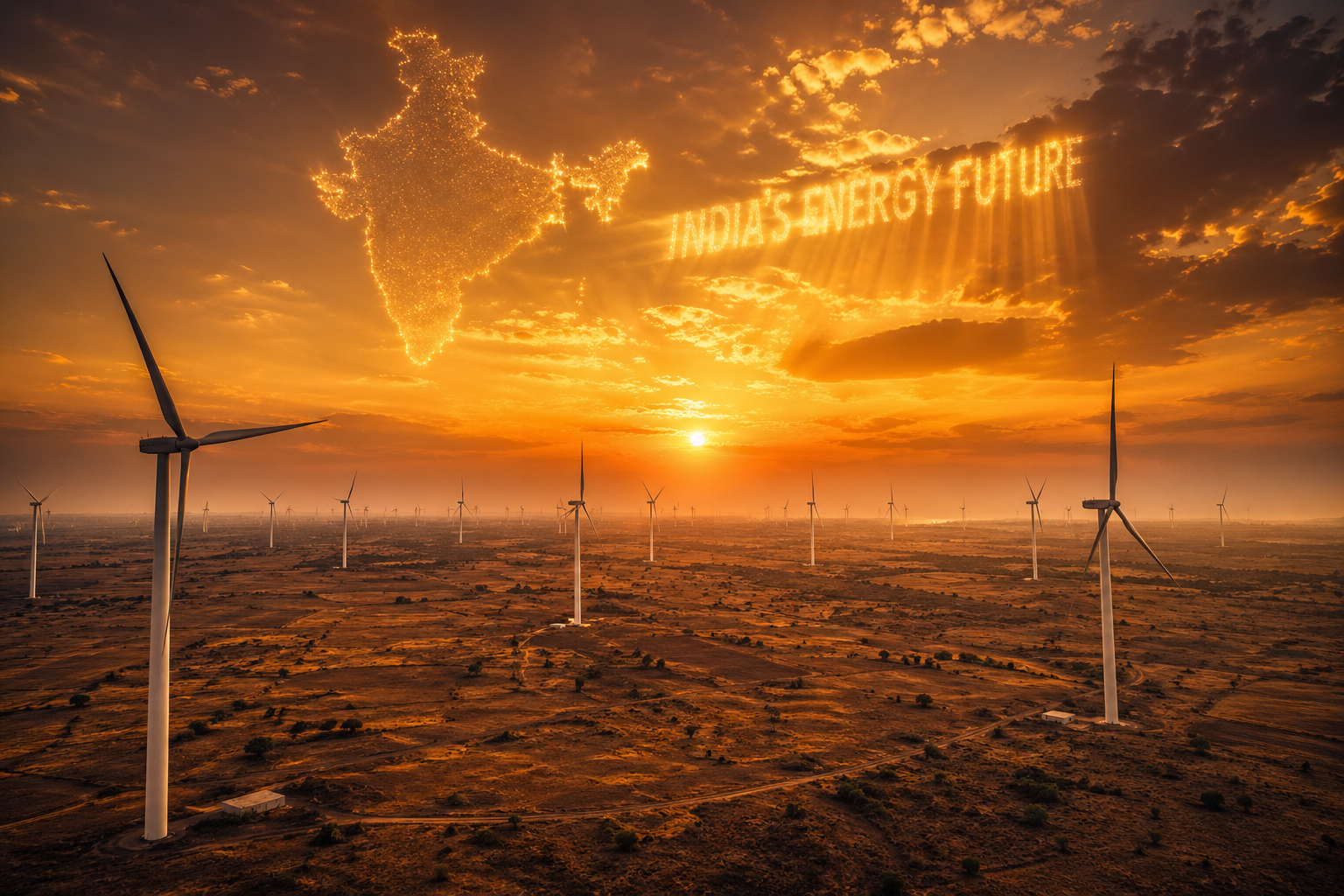
💡 Quick Snapshot: Suzlon Energy has transformed from a debt-riddled industrial casualty into India’s most powerful clean energy conglomerate — completely debt-free, sitting on ₹1,556 crore of net cash, and holding a record-breaking 6.4 GW order book. This is the full story of one of India’s most remarkable corporate comebacks.
🌍 1. Why Suzlon Energy Matters Right Now
The global energy revolution is no longer a future forecast — it is happening right now, and India sits at the very center of it. Rapid urbanization, exploding digital infrastructure, and the rise of electric mobility are pushing India’s projected power demand toward a staggering 4,490 Terawatt-hours (TWh) by 2047, according to government energy projections.
To meet this demand cleanly, the Government of India has committed to installing 500 GW of non-fossil fuel capacity by 2030 — a mandate that is reshaping capital flows, industrial priorities, and entire corporate ecosystems. Within this context, Suzlon Energy is not just a stock or a company. It is arguably the single most important industrial instrument of India’s energy sovereignty.
Wind energy, in particular, has moved from being a supplementary source to a foundational grid stabilizer. Solar power, which boomed over the last decade due to plummeting panel costs, has a critical vulnerability: it goes dark after sunset. Wind turbines, by contrast, often generate peak power during evening and nighttime hours — precisely when solar goes silent. This complementarity makes Suzlon Energy, India’s premier wind turbine manufacturer, indispensable to any serious grid planner.
With the wind sector targeted to reach 400 GW by 2047 at a 10% compound annual growth rate, the runway for Suzlon Energy’s expansion is not measured in quarters. It is measured in decades.
🏭 2. The Origin Story: From Textiles to Turbines
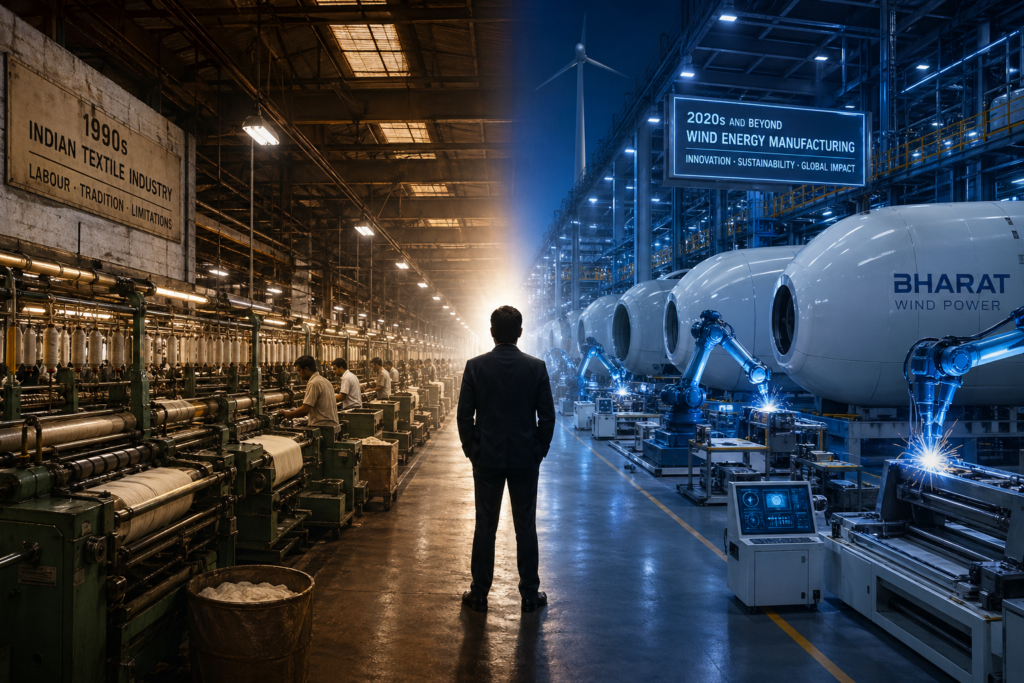
Every great company has a founding myth, and Suzlon Energy’s is rooted in frustration rather than idealism. On April 10, 1995, mechanical engineer and entrepreneur Tulsi R. Tanti incorporated Suzlon Energy in Pune, Maharashtra — not because he wanted to save the planet, but because unreliable electricity was killing his textile business in Gujarat.
In 1990s India, the power grid was an unreliable partner for manufacturers. Outages were frequent, grid tariffs were punishing, and industrial cost-competitiveness suffered enormously. Rather than accepting this as an immutable constraint, Tanti pivoted his entire enterprise toward solving the energy problem at its root.
What set Suzlon Energy apart from the very beginning was its “Concept to Commissioning” business model. While others were importing turbines from Europe and bolting them to hillsides, Suzlon Energy was designing, manufacturing, installing, and maintaining entire wind projects — becoming an end-to-end solutions provider rather than a mere hardware vendor. This integrated approach was revolutionary for the Indian market and remains a core competitive moat to this day.
🚀 3. The Spectacular Rise, Fall, and Resurrection of Suzlon Energy

The Hyper-Expansion Era 🔝
Early domestic success emboldened Suzlon Energy to dream globally. By 2001, the company had commissioned its first domestic manufacturing plant and fulfilled its first international export order — 24 turbines for a wind project in southwestern Minnesota, USA. This international credibility paved the way for a landmark IPO in 2005, which was oversubscribed an astonishing 40 times, valuing the company at approximately ₹14,000 crore.
Flush with equity capital, Suzlon Energy went on a global acquisition spree. In 2006, it acquired Hansen Transmissions, a Belgian gearbox specialist, for $565 million. This was followed by the bold acquisition of REpower Systems AG (later Senvion), a premier German turbine maker, in 2007. At its peak, Suzlon Energy ranked as the world’s fifth-largest wind turbine manufacturer — a jaw-dropping achievement for an Indian company founded barely a decade earlier.
The Painful Collapse 📉
Then came 2008. The global financial crisis froze credit markets, vaporized project financing, and triggered mass order cancellations worldwide. Suzlon Energy’s debt-funded acquisitions, which had looked strategically brilliant in a high-liquidity environment, became existential liabilities overnight.
For the next decade, Suzlon Energy became a cautionary tale in Indian corporate history — multiple debt restructuring programs, forced asset sales, progressive divestiture of Hansen and Senvion, and a relentless narrowing of focus back to the Indian domestic market. By FY2020, the company still carried over ₹13,000 crore of legacy debt, and its very survival was in question.
The Phoenix Rises: “Suzlon 2.0” ♻️
The turnaround began in earnest between 2022 and 2025. A landmark Follow-on Public Offer (FPO) in April 2023 raised approximately ₹2,100 crore. Combined with rigorous working capital discipline and favorable macroeconomic tailwinds in India’s renewable boom, Suzlon Energy began systematically extinguishing its debts.
By the close of FY2024-25, Suzlon Energy achieved what had seemed impossible for a decade: it became completely debt-free and transitioned into a net-cash positive entity, sitting on ₹1,556 crore of net cash as of December 2025. This is the defining milestone of the “Suzlon 2.0” era.
🏆 Milestone Alert: From carrying ₹13,000+ crore of crushing debt in FY20 to holding ₹1,556 crore in net cash by December 2025. Suzlon Energy’s financial transformation is genuinely one of the most remarkable corporate turnarounds in modern Indian industrial history.
🎯 4. Suzlon 2.0: The Strategy Redefining Indian Wind Energy
The “Suzlon 2.0” blueprint is far more ambitious than simply stabilizing the balance sheet. Suzlon Energy’s new management has articulated a vision that pivots the company from a cyclical turbine manufacturer into a diversified, full-stack clean energy conglomerate — capable of capturing value across every layer of the renewable value chain.
🔗 The DevCo Vertical: Breeding Projects, Not Just Building Turbines
The total addressable market for renewable energy in India through FY30 is estimated at a staggering ₹12 lakh crore, with complex hybrid projects alone accounting for ₹17.25 lakh crore in cumulative capital deployment. To capture a meaningful slice of this, Suzlon Energy is launching “DevCo” — a standalone project development vertical that will incubate Firm and Dispatchable Renewable Energy (FDRE) projects from scratch.
DevCo’s mandate is to handle the most painful early-stage risks: land acquisition, environmental approvals, grid connectivity negotiations, and regulatory liaisoning. By delivering “construction-ready” projects with compressed timelines of just 12-18 months, DevCo dramatically improves project economics for end clients and captures development margins that previously flowed to third-party specialists.
🔄 The Repowering Gold Mine
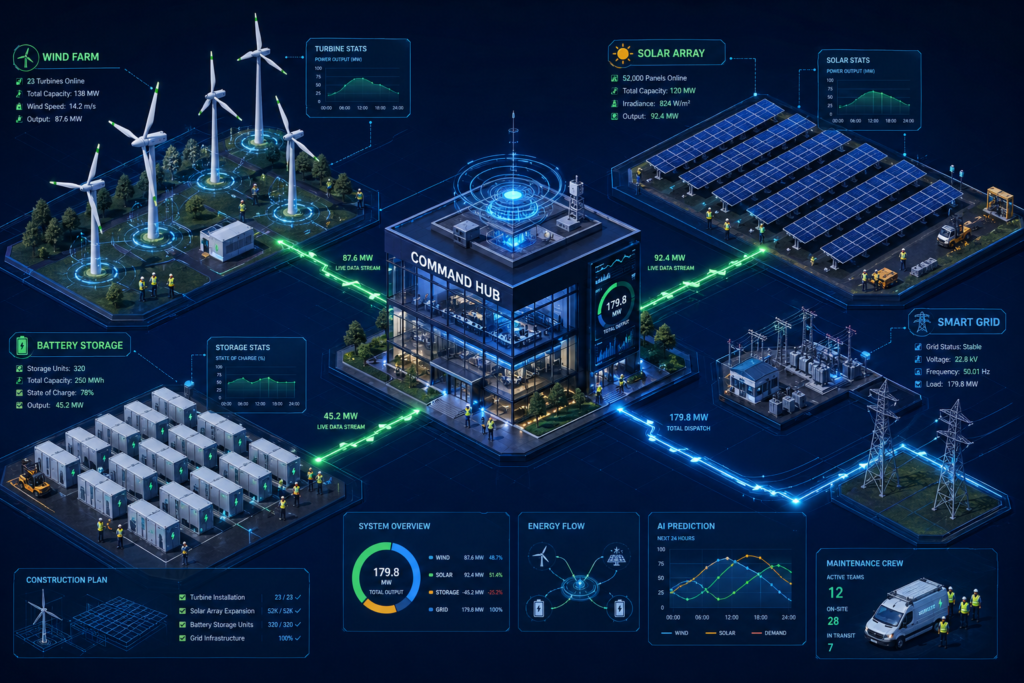
India’s earliest wind farms, built in the late 1990s and early 2000s, occupy the nation’s most coveted high-wind corridors — but they are locked up by ancient, sub-megawatt turbines running at terrible efficiencies. The repowering opportunity is enormous: by decommissioning these obsolete assets and installing advanced 3 MW+ platforms on the same land footprint, developers can triple or quadruple power output while leveraging existing substation infrastructure.
Suzlon Energy’s established relationships with the owners of these legacy wind farms give it a near-insurmountable competitive advantage. In April 2026, this advantage was crystallized when Suzlon Energy and South Korea’s GS E&C announced a massive strategic alliance targeting Indian renewable energy, with investments valued at approximately KRW 920 billion (over ₹56,000 crore), focused heavily on wind repowering.
🏗️ Expanding EPC and the OMS Annuity Engine
Suzlon Energy has set a clear target to grow its Engineering, Procurement, and Construction (EPC) business to 50% of total revenues by 2028, up from 27% in Q3 FY26. Higher EPC share means higher top-line realization and greater internalization of margins that currently flow to third-party civil contractors.
Underpinning all of this is Suzlon Energy’s massive Operations, Maintenance, and Services (OMS) portfolio — currently managing over 15.2 GW of domestic wind assets and an additional 6 GW internationally. By transforming OMS into a digital-first, AI-predictive maintenance platform, Suzlon Energy is converting this portfolio into a high-margin, annuity-like recurring revenue stream that cushions profitability through hardware sales cycles.
⚙️ 5. S144 Turbine: The Technology That Changed Everything

The Indian wind market has a fundamental meteorological challenge: unlike the blustery North Sea or the American Great Plains, most of India’s available onshore terrain is classified as low-to-medium wind speed regimes. European turbine designs optimized for high winds simply don’t perform here. Suzlon Energy’s competitive dominance is built on engineering machines specifically for India’s atmospheric reality.
The S144 Platform — Engineering for India’s Skies
The Suzlon S144 is the vanguard of Suzlon Energy’s domestic product strategy, and its specifications represent a genuine engineering achievement:
| Technical Parameter | S144 Specification |
|---|---|
| ⚡ Rated Power Output | 3.00 MW (up to 3.15 MW) |
| 🌀 Rotor Diameter | 144 meters |
| 📐 Swept Area | 16,618 m² |
| 🏗️ Hub Height | Up to 160 meters |
| 🔩 Tower Technology | Modular Hybrid Lattice Tubular (HLT) |
| 💨 Cut-in Wind Speed | 3.0 m/s |
| 🔬 Blade Technology | SB70 — 70m, full carbon girder, flatback trailing edge |
| 🌿 Carbon Footprint | 6.17 gCO₂/kWh (audited, cradle-to-grave) |
The aerodynamics of the S144 are meticulously calibrated for Indian conditions. The massive 144-meter rotor diameter commands a swept area exceeding 16,618 square meters, harvesting kinetic energy efficiently at a remarkably low cut-in speed of just 3.0 m/s. The 160-meter HLT tower — currently the tallest wind turbine deployed in India — elevates the nacelle above turbulent lower atmospheric layers into the smoother, faster airflows higher up.
The SB70 carbon fiber blades are a materials science showcase. At 70 meters, they use a carbon girder and flatback trailing edge design that maximizes lift at the blade root while keeping structural mass extraordinarily low. The collective result? The S144 delivers 40% to 43% higher energy generation yield compared to Suzlon Energy’s older S120 models — unlocking commercial viability at sites previously considered too marginal for investment.
The Blue Sky Platform: Suzlon Energy Returns to Europe 🌐
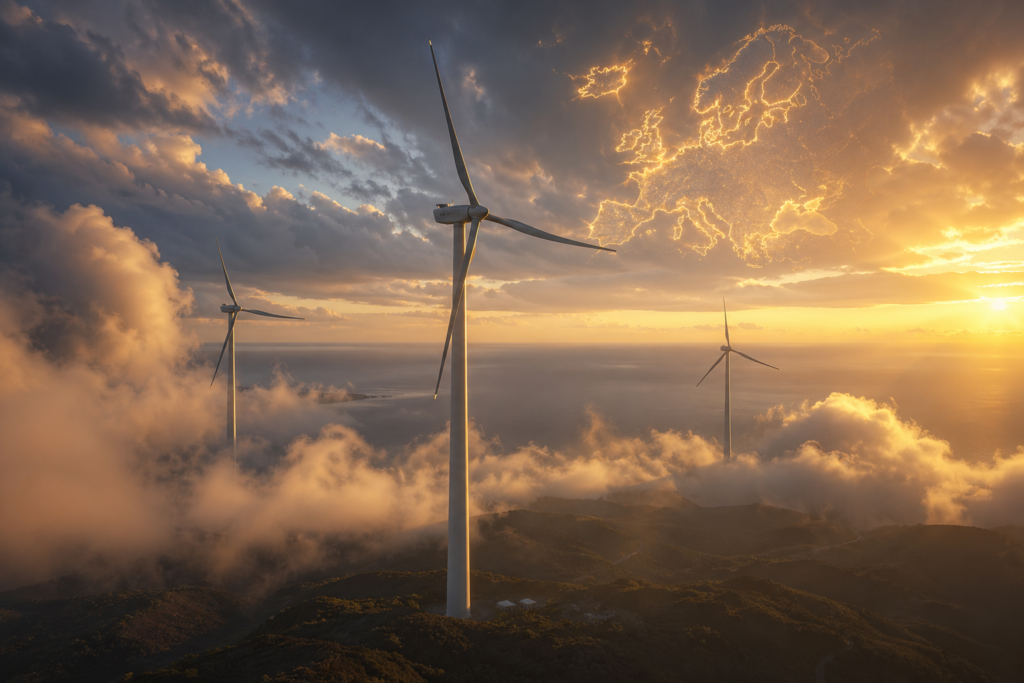
At WindEurope 2026 in Madrid, Suzlon Energy officially announced its re-entry into the European market with the next-generation ‘Blue Sky’ platform, offered in two variants:
The S175 (5 MW) is engineered for low-wind terrestrial sites deep within the European landmass, while the S163 (6.3 MW) targets moderate-to-high wind coastal corridors. Both models support tip heights of up to 250 meters, targeting the European repowering market estimated at 17–20 GW. Building on Suzlon Energy’s existing 660+ MW installed across Europe, the Blue Sky platform aims to re-establish the company as a serious global contender.
💰 6. Financial Deep Dive: Numbers That Tell the Real Story
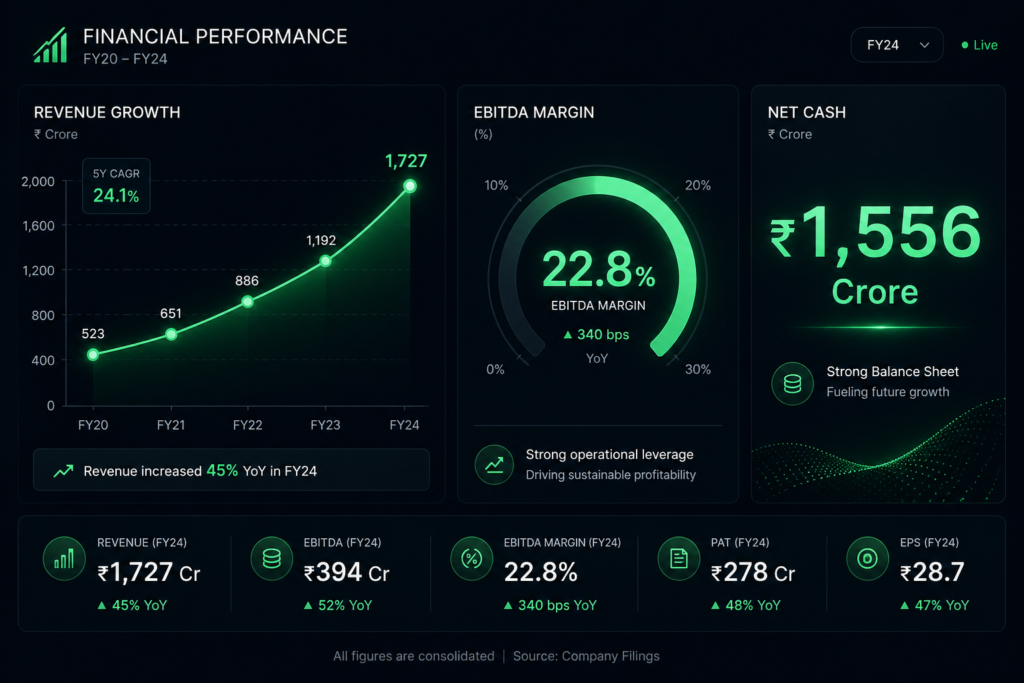
The true scale of Suzlon Energy’s transformation becomes undeniable when you look at the audited financials. The elimination of punishing finance costs has unleashed extraordinary operating leverage.
Key Financial Performance
| Metric | FY25 (Full Year) | Q3 FY26 (Dec ’25) | 9M FY26 |
|---|---|---|---|
| 📦 Net Deliveries | 1,550 MW | 617 MW | — |
| 💵 Revenue | ₹10,851 Cr | ₹4,228 Cr | ₹11,211 Cr |
| 📈 Revenue Growth (YoY) | +67.0% | +48.0% | +58.0% |
| 💹 EBITDA | ₹1,857 Cr | ₹739 Cr | ₹2,058 Cr |
| 📊 EBITDA Margin | 17.1% | 17.5% | Consistent expansion |
| 🏆 Profit After Tax | ₹2,072 Cr | ₹445 Cr | ₹2,049 Cr |
| 💰 PAT Growth | +214% (FY25 vs FY24) | — | — |
The 617 MW delivered in Q3 FY26 alone represents Suzlon Energy’s highest-ever quarterly delivery in three decades of operation. Total borrowings have been slashed to a negligible ₹283 crore against a consolidated net worth of ₹8,332 crore — a balance sheet transformation that was genuinely unthinkable five years ago.
Valuation Snapshot (As of April 2026) 📊
Suzlon Energy’s market capitalization has stabilized around the ₹73,000–78,000 crore bracket. The stock trades at a trailing P/E of approximately 20.6–24.6x, delivering an exceptional Return on Equity (ROE) of 41.4% and a Return on Capital Employed (ROCE) of 32.5%. These efficiency ratios are genuinely exceptional for a capital-intensive manufacturing business and reflect the power of the debt-free balance sheet.
📌 Analyst Consensus: Brokerages including ICICI Securities, JM Financial, and Morgan Stanley maintain constructive price targets in the ₹65–₹80 range, implying meaningful upside from the mid-₹50s trading range seen in April 2026.
📋 7. The ₹6.4 GW Order Book — Who’s Buying and Why
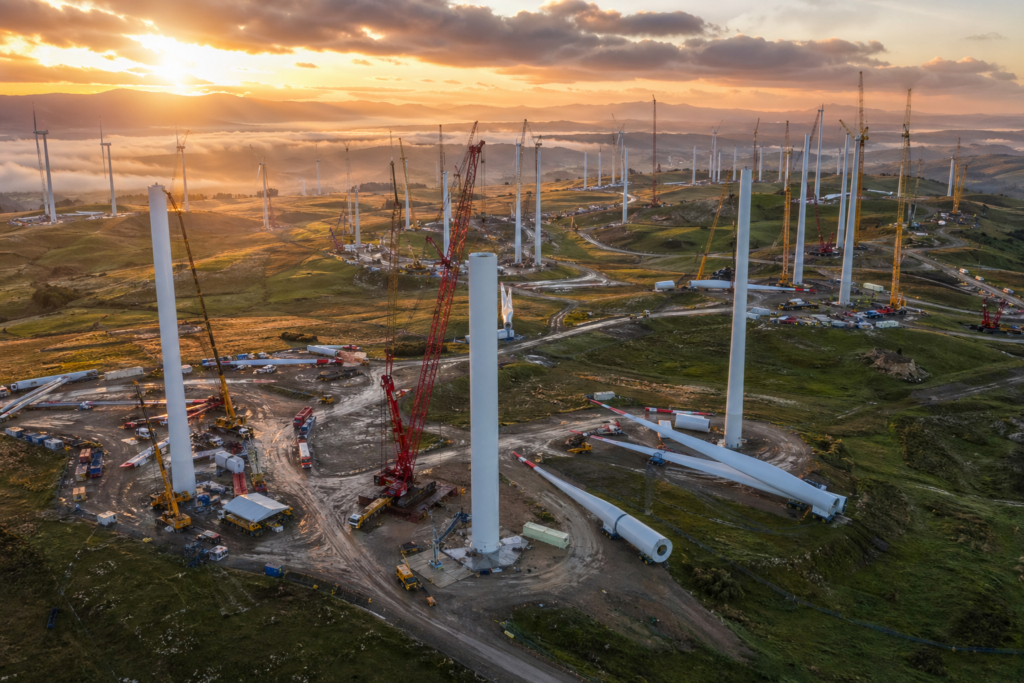
Suzlon Energy’s backlog is the most powerful leading indicator of its financial health. At 6.4 GW (6,409 MW) as of Q3 FY26, it is the highest-ever order book in the company’s history, providing clear revenue visibility across multiple future fiscal years.
Order Book Composition 🔍
The client mix reveals exceptional diversification. Approximately 51% originates from high-margin Commercial & Industrial (C&I) and captive retail segments, while 36% comes from central and state utility auction bids, and the remaining 13% represents direct PSU contracts. No single client type dominates, which is a crucial risk buffer.
Marquee Recent Orders 🤝
🏛️ NTPC Green Energy — A colossal 1,544 MW consolidation + a recent 378 MW award = the largest partnership in Suzlon Energy’s entire history. When India’s preeminent state utility places this kind of trust, it carries enormous market signal.
⚡ Tata Power Renewable Energy — An 838 MW strategic order using 266 units of the S144 turbine for complex FDRE projects across Karnataka, Maharashtra, and Tamil Nadu.
🏗️ ArcelorMittal Nippon Steel — A 550 MW hybrid captive project in Gujarat using 79 S144 turbines, aimed at greening one of the world’s largest steel producers. A textbook example of industrial decarbonization.
🏭 GAIL (India) — A strategic 100 MW repeat order to decarbonize GAIL’s upcoming petrochemical plant in Nandurbar, Maharashtra.
🌿 Juniper Green & Oyster Green — Successive rapid orders aggregating 480+ MW across Rajasthan and Madhya Pradesh.
Technologically, a remarkable 89% of the entire pipeline demands the advanced S144 platform — concrete validation that Suzlon Energy’s product development bet has paid off. The company currently has 2.4 GW of active execution underway across various sites simultaneously.
⚔️ 8. Competitive Landscape: Can Anyone Catch Suzlon Energy?

Suzlon Energy commands an estimated 31–35% market share in the Indian wind OEM market — but that dominance is increasingly contested.
Domestic Rival: Inox Wind 🆚
| Metric | Suzlon Energy | Inox Wind |
|---|---|---|
| Market Position | 🥇 #1 (~31–35% share) | 🥈 #2 |
| Order Book | 6.4 GW | ~3.2 GW |
| Q3 FY26 Revenue Growth | +48% YoY | +24% YoY |
| Q3 FY26 Deliveries | 617 MW (single quarter) | ~600 MW (entire 9 months) |
| Flagship Turbine | S144 (3.0–3.15 MW) | 3.3 MW Booster |
Inox Wind is a credible and well-capitalized rival, but the execution gap is widening. Inox’s Q3 FY26 delivery numbers lagged estimates due to customer-side site readiness delays — precisely the kind of logistical friction that Suzlon Energy’s larger supply chain and liaisoning network is better equipped to absorb.
Adani Wind looms as a disruptive force with its advanced 5.2 MW platforms and immense capital reserves, but its current deployment is skewed heavily toward captive projects within the Adani conglomerate ecosystem — effectively leaving Suzlon Energy as the preferred independent vendor for unaligned IPPs, C&I clients, and central utilities.
Global Giants and the “Make in India” Shield 🛡️

Vestas, Siemens Gamesa, and GE Vernova possess superior global capital and 4–6 MW platforms, but they consistently struggle with India’s localized cost structures and the labyrinthine reality of state-level land acquisition. Chinese OEMs like Goldwind and Envision face even steeper barriers — the Indian government’s RLMM certification framework and “Make in India” domestic content mandates effectively wall off direct Chinese market penetration.
Suzlon Energy localizes 83.25% of its S144 supply chain through Indian Tier-1 suppliers, making it structurally immune to geopolitical trade shocks and the natural preferred partner for Indian PSUs.
🌱 9. ESG Leadership: More Than a PR Exercise

At the World Economic Forum’s Annual Meeting in Davos, Corporate Knights ranked Suzlon Energy among the Top 10 in the 2026 Global 100 Most Sustainable Corporations — a recognition that places it alongside the world’s most respected sustainability leaders, not just in India, but globally.
This ranking is grounded in empirical operational realities, not greenwashing. Suzlon Energy became the first Indian energy firm to join the Climate Group’s RE100 initiative, committing to power 100% of its manufacturing facilities worldwide with renewable energy by 2030, complemented by an EV100 pledge to fully electrify its corporate fleet by 2035.
The operational data is equally striking. During FY25, Suzlon Energy documented an 88.51% reduction in emission intensity across Scope 1 and Scope 2 parameters, alongside a 90.14% zero-waste-to-landfill metric across its operational footprint.
The commercial application of this ESG positioning is potent. The S144 turbine has been independently verified by TÜV SÜD with a cradle-to-grave Product Carbon Footprint of just 6.17 gCO₂/kWh — radically below industry averages. For corporate clients like ArcelorMittal who need ultra-low carbon energy to avoid international Carbon Border Adjustment Mechanism (CBAM) tariffs, this number is not a marketing metric. It is a commercial necessity.
🏛️ 10. The New Leadership Architecture Driving Suzlon Energy Forward

In February 2026, Suzlon Energy announced the formation of a Group Executive Council (GEC), formalizing the transition from a promoter-driven enterprise to a professionally managed industrial conglomerate.
| Executive | Role | Background |
|---|---|---|
| Ajay Kapur | Group CEO | Wharton alumnus, 30+ years in heavy industry; formerly MD of Ambuja Cements (Adani Group) |
| Rahul Jain | Group CFO | Chartered Accountant; veteran of SRF Limited and Jubilant Organosys |
| J.P. Chalasani | GEC Member | Former Group CEO; institutional memory and utility relationships |
The appointment of a CEO with deep experience in capital-heavy, margin-sensitive sectors like cement signals a clear corporate pivot toward operational efficiency and rigorous execution discipline — precisely what a 6.4 GW backlog demands. Institutional investors have responded: FII ownership in Suzlon Energy climbed from 22.7% in September 2025 to 23.9% by March 2026, while domestic mutual funds hold approximately 4.87% of the equity base.
⚠️ 11. Risks You Cannot Ignore Before Investing in Suzlon Energy
Even the most compelling turnaround stories carry material risks, and Suzlon Energy is no exception. The current valuation applies premium growth multiples, leaving a narrow margin for operational error.
🚧 Macro-Execution and Logistical Bottlenecks — Deploying 6.4 GW involves fabricating and transporting thousands of 70-meter blades and 160-meter towers across India’s challenging highway network. Even micro-delays in state-level land acquisition, Right-of-Way clearances, or customer site readiness can defer revenue recognition and compress quarterly EBITDA margins significantly.
⚡ Grid Evacuation Infrastructure Lags — Suzlon Energy can scale its automated manufacturing relatively quickly, but high-voltage transmission line construction by state authorities is notoriously slow. A mismatch between turbine commissioning and grid availability can strand assets and lock up working capital — a scenario that has derailed wind project economics before.
🌐 Global Supply Chain Volatility — While 83.25% of the S144 is locally sourced, critical sub-components remain exposed to international commodity cycles and potential geopolitical shipping disruptions that could impact margins.
📉 Regulatory Risk — The current ISTS waiver framework and FDRE procurement models are policy constructs. Any adverse modification to these frameworks could dampen order velocity, even if Suzlon Energy’s own execution remains strong.
🔮 12. Investment Outlook: The Structural Case for Suzlon Energy

The investment case for Suzlon Energy rests on a set of structural realities that are difficult to argue against. India’s 500 GW renewable mandate is not aspirational rhetoric — it is backed by institutional procurement frameworks, regulatory waivers, and multi-billion dollar capital commitments from PSUs and global developers alike.
Suzlon Energy sits at the intersection of all these vectors with a multi-year revenue pipeline (6.4 GW backlog), an impenetrable debt-free balance sheet, a defensible OMS annuity business managing 15.2 GW of assets, and a product portfolio specifically engineered for India’s atmospheric and regulatory conditions. The Blue Sky platform and the GS E&C partnership add a credible international growth dimension that previous iterations of the company could never sustain.
The newly installed Group Executive Council, led by executives with decades of experience in capital-intensive, margin-sensitive industries, directly addresses the execution-risk criticism that has historically applied a discount to Suzlon Energy’s valuation multiples.
🎯 The Bottom Line: If India’s energy transition plays out even close to its stated trajectory — and there are strong structural reasons to believe it will — Suzlon Energy is not merely a beneficiary of this transition. It is one of its primary industrial engines. The question for investors is not whether the tailwind is real, but whether the new management can execute against the largest order book in the company’s history without stumbling. The first few quarters of FY27 will be revealing.
❓ 13. Frequently Asked Questions About Suzlon Energy
Q: Is Suzlon Energy debt-free in 2025/2026? Yes. By the close of FY24-25, Suzlon Energy had completely eliminated its legacy debt and transitioned into a net-cash positive entity. As of December 31, 2025, the company held a net cash position of ₹1,556 crore with total borrowings of just ₹283 crore against a net worth of ₹8,332 crore.
Q: What is Suzlon Energy’s current order book size? As of Q3 FY26 (ending December 2025), Suzlon Energy reported its highest-ever closing order book of 6.4 GW (6,409 MW), diversified across C&I clients (51%), utility auctions (36%), and PSU contracts (13%).
Q: What is the S144 turbine and why does it matter? The S144 is Suzlon Energy’s flagship 3 MW wind turbine platform, specifically engineered for India’s low-to-medium wind speed sites. Its 144-meter rotor, 160-meter tower, and 70-meter carbon fiber blades deliver 40-43% higher energy yield than older models, unlocking commercial viability at previously marginal wind sites across India.
Q: Who are Suzlon Energy’s biggest competitors? Domestically, Inox Wind is the closest rival with a ~3.2 GW order book, though it trails significantly in execution scale. Adani Wind is an emerging disruptor. Internationally, Vestas, Siemens Gamesa, and GE Vernova compete in large utility tenders but struggle with India’s cost structures. Chinese OEMs are effectively blocked by RLMM certification requirements and domestic content mandates.
Q: What is “Suzlon 2.0”? Suzlon 2.0 is the company’s strategic transformation vision beyond standalone turbine manufacturing. It encompasses the DevCo project development vertical, aggressive EPC expansion to 50% of revenue by 2028, AI-enabled smart manufacturing, the Blue Sky European platform, and the digitalization of the OMS portfolio — together repositioning Suzlon Energy as a full-stack renewable energy solutions conglomerate.
Q: What do analysts say about Suzlon Energy’s stock price target? Leading brokerages including ICICI Securities, JM Financial, and Morgan Stanley have maintained constructive outlooks on Suzlon Energy, with price targets frequently cited in the ₹65 to ₹80 range, suggesting meaningful upside from the mid-₹50s trading range observed in April 2026.
🔗 Key External Resources
- Ministry of New and Renewable Energy (MNRE) — India
- Solar Energy Corporation of India (SECI)
- Suzlon Energy Official Website
- NTPC Green Energy Limited
- WindEurope — Industry Association
- Climate Group RE100
- TÜV SÜD Independent Certification
- World Economic Forum — Energy Transition
- Carbon Border Adjustment Mechanism (EU CBAM)
- SEBI — Indian Securities Regulator
📝 Disclaimer: This article is for informational and educational purposes only and does not constitute financial or investment advice. Always conduct your own due diligence or consult a SEBI-registered investment advisor before making investment decisions. Past performance is not indicative of future results.
Tags: #SuzlonEnergy #WindEnergy #RenewableEnergy #IndiaRenewables #CleanEnergy #S144Turbine #SuzlonStock #GreenEnergy #WindPower #EnergyTransition #Sustainability #ESG #IndiaStocks #MakeInIndia